Reality TV thrives on drama. But what happens when the drama stops feeling like entertainment and starts sounding like a crisis?
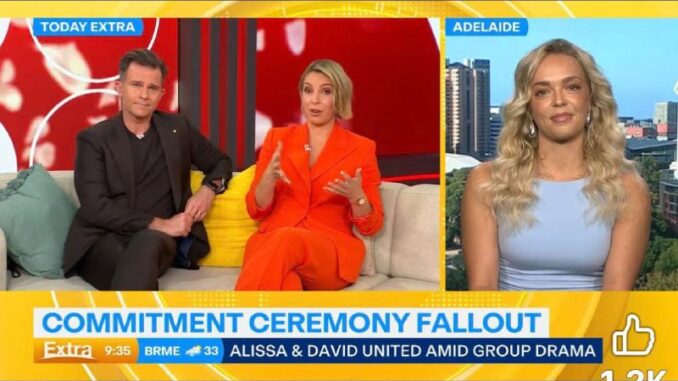
A viral Facebook post has ignited a firestorm around Married at First Sight Australia after shocking allegations surfaced during a televised interview. According to the post, Alissa claimed that Brooke endured seven hours of ongoing abuse. Even more explosive, the show’s on air facilitator reportedly confirmed the length of the incident while offering feedback during a recent episode.
Seven hours.
Not seven minutes. Not a heated exchange that spiraled. Seven hours of alleged sustained abuse.
And now viewers are asking a chilling question: where were the producers?
When “Drama” Crosses the Line
Reality television often operates in a gray zone. Arguments are expected. Tears are inevitable. Tension is practically part of the contract. But abuse, if accurately described, is not storyline fuel. It is a serious matter that carries emotional, psychological, and potentially legal consequences.
The Facebook post did not mince words. It labeled the situation a “disorder” and called the lack of producer intervention “unconscionable and highly unethical.” Strong language. But strong language tends to follow strong allegations.
Viewers who once tuned in for awkward weddings and dinner party blowups are now questioning whether the show crossed an invisible but critical boundary.
At what point does entertainment become exploitation?
The Role of the Experts and Facilitators
One of the pillars of MAFS Australia is its panel of relationship experts and facilitators. Their role is to guide, analyze, and occasionally intervene. When a facilitator reportedly confirmed the duration of the alleged abuse during feedback, it added weight to the claim.
For many fans, that confirmation shifted the conversation from rumor to serious concern.
If an authority figure within the show acknowledged the incident’s length, then the natural follow up question becomes: why was it allowed to continue?
Was it monitored in real time?
Was it reviewed after the fact?
Were proper welfare checks conducted?
These are not trivial questions. They go to the heart of duty of care.
Producer Responsibility: Entertainment vs Ethics
Reality television production teams are not passive observers. They control filming schedules, environments, security, and participant welfare structures. Contestants sign contracts, yes. But contracts do not erase the obligation to ensure safety.
If allegations of prolonged abuse are accurate, critics argue producers had a responsibility to intervene immediately.
The viral post goes even further, suggesting the show should be taken off the air pending an investigation. That is not a small demand. That is a reputational earthquake.
For a franchise as massive as MAFS Australia, such calls could have ripple effects across networks, advertisers, and international versions of the series.
A Pattern or a Breaking Point?
MAFS Australia has faced controversy before. Heated arguments, emotionally volatile participants, and accusations of manipulation have shadowed the series in past seasons. Critics have long argued that intense situations are sometimes amplified for ratings.
But this moment feels different.
When public conversation shifts from “wild TV drama” to “potential abuse mishandling,” the stakes escalate dramatically.
Viewers are no longer debating who should leave the experiment. They are debating whether the experiment itself is ethically sound.
Social Media as Judge and Jury
The power of a single Facebook post should not be underestimated. In today’s media ecosystem, public outrage can travel faster than official statements.
Comment sections have become digital courtrooms. Some fans are demanding accountability. Others are urging caution until more verified information emerges.
And then there is the most extreme suggestion: pull the show off the air entirely until an independent investigation is conducted.
That kind of pressure can force networks into defensive mode. Silence becomes suspicious. Statements become scrutinized line by line.
What Happens Next?
There are several possible paths forward:
The network could issue a formal statement clarifying what happened.
An independent investigation could be launched.
Additional welfare safeguards could be announced.
Or the controversy could fade if further evidence does not support the claims.
But one thing is certain: once trust is shaken, it is difficult to rebuild.
Reality TV depends on viewer engagement. If audiences begin to feel complicit in something harmful rather than entertained by something dramatic, loyalty can evaporate quickly.
A Franchise at a Crossroads
MAFS Australia is more than just a show. It is a cultural phenomenon. It trends globally. It fuels podcasts, blogs, and heated dinner table debates.
But with popularity comes responsibility.
If the allegations circulating online hold weight, this could mark a turning point not only for MAFS Australia, but for reality television as a whole. Producers everywhere may be forced to reassess their intervention policies and participant welfare frameworks.
The viral post ends with a powerful demand: someone in authority needs to hold producers accountable.
Whether that accountability comes through internal review, regulatory scrutiny, or public pressure remains to be seen.
For now, the spotlight has shifted. Not onto the couples. Not onto the drama.
But onto the people behind the cameras.
And that might be the most uncomfortable storyline of all.
Leave a Reply