Australia has long been known as a country rich in natural resources, yet when it comes to one critical sector, the nation finds itself in a surprisingly vulnerable position.
Fuel security.
In recent years, Australia has closed several domestic oil refineries, increasing its reliance on imported fuel from overseas. While global trade has kept supply flowing for now, many experts are beginning to raise a serious concern:
What happens if that supply chain is suddenly disrupted?
This question has ignited a growing national debate about whether Australia should invest in building more oil refineries to secure its energy future.
Australia’s Refinery Problem
Not long ago, Australia had a much larger network of domestic refineries producing petrol, diesel, and jet fuel.
But over time, global market pressures, operating costs, and competition from larger international refineries led to the closure of several facilities.
Today, only a small number of refineries remain operating in the country.
This shift means Australia now imports a large portion of its refined fuel products, including the petrol used by millions of drivers every day.
For some analysts, that dependence has become a strategic vulnerability.
Why Fuel Security Matters
Fuel is more than just something that powers cars.
It keeps the entire economy moving.
Trucks deliver food to supermarkets. Planes transport passengers and cargo. Emergency services rely on fuel to operate vehicles and equipment.
If supply chains were disrupted due to geopolitical tensions, shipping delays, or global conflicts, the impact could ripple quickly across the country.
That’s why some experts argue that expanding refining capacity inside Australia could strengthen national resilience.
In their view, local refineries act as a safety net during global crises.
The Case for Building More Refineries
Supporters of expanding refinery capacity believe the issue is about long-term national security.
They argue that relying heavily on imported refined fuel places the country at risk if international supply routes are interrupted.
Some defense analysts have even raised concerns about how fuel shortages could affect military readiness in times of crisis.
Building more refineries, they say, could help ensure that Australia maintains a steady supply of essential fuels even if global markets become unstable.
Supporters also point out potential economic benefits.
New refineries could create jobs, support local industries, and strengthen energy independence.
The Counterargument
However, not everyone agrees that building new oil refineries is the best path forward.
Critics argue that such projects would require enormous financial investment and years of construction before becoming operational.
They also point out that the world is gradually transitioning toward cleaner energy sources.
Investing billions into new fossil fuel infrastructure, they say, could risk locking Australia into outdated technology just as renewable energy becomes more dominant.
From this perspective, funds might be better spent accelerating the transition toward electric vehicles, renewable energy, and alternative fuels.
The Global Energy Shift
Energy markets around the world are undergoing a transformation.
Countries are exploring new ways to reduce dependence on fossil fuels while maintaining energy security.
This balancing act is not easy.
On one hand, traditional fuels like petrol and diesel still power much of the global economy.
On the other hand, governments and industries are increasingly investing in renewable solutions such as solar, wind, and hydrogen.
For Australia, the challenge is deciding how to navigate this transition while ensuring the country remains prepared for unexpected disruptions.
A Strategic Decision
The debate about oil refineries ultimately touches on several important questions.
How much energy independence should Australia have?
Should the country invest more heavily in traditional fuel infrastructure?
Or should it focus primarily on accelerating the shift toward new energy technologies?
Each option carries potential benefits and risks.
And the decision will likely shape the nation’s energy landscape for decades.
Australians Are Now Asking the Big Question
The discussion is no longer limited to policymakers and industry experts.
More Australians are beginning to consider what fuel security means for everyday life.
If global supply chains were disrupted tomorrow, would the country have enough refining capacity to keep fuel flowing?
Or would reliance on imports create dangerous vulnerabilities?
What Do You Think?
The debate continues across Australia, with strong opinions on both sides.
Some believe building more oil refineries is essential for national security and economic stability.
Others argue that the future lies in renewable energy, not expanding fossil fuel infrastructure.
So the question now goes to you:
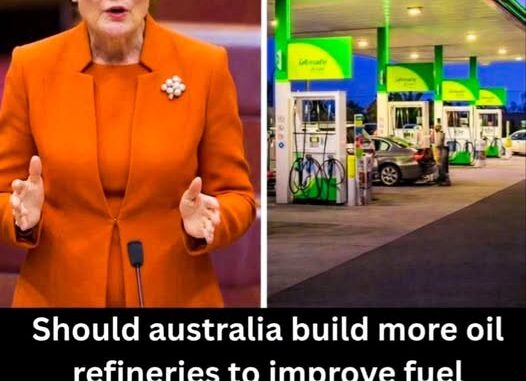
Should Australia build more oil refineries to improve fuel security?
🟢 YES – Strengthen domestic fuel production
🔴 NO – Focus on renewable energy instead
Share your opinion and join the conversation. The future of Australia’s energy strategy may depend on it. ⛽🇦🇺
Leave a Reply